Cascadia Was Wrong: What New Research Published in April 2026 Just Changed About the Most Dangerous Fault in North America

Scientists thought they understood the Cascadia Subduction Zone. They had mapped it, modeled it, and built an entire regional hazard framework around those models. New research published in April 2026 has revised three fundamental components of that framework — and each revision points in the same direction. The risk is larger than the previous models suggested.
Here is what changed, why it matters, and what it means for the millions of people living within range of a Cascadia megaquake.
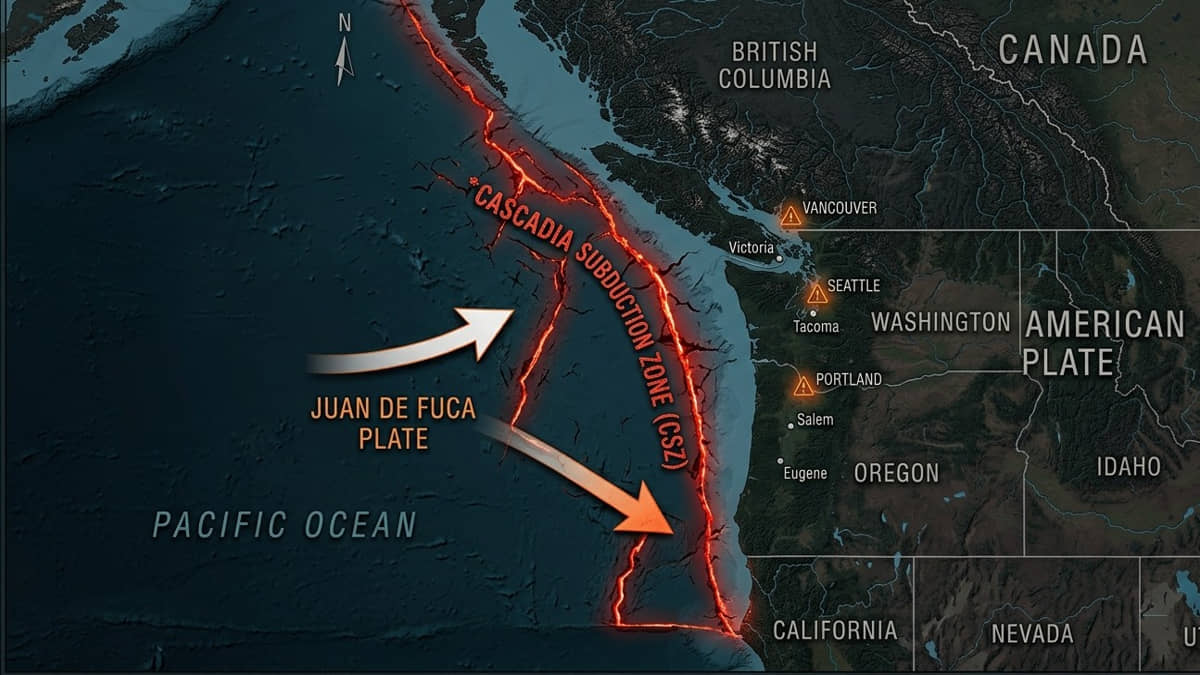
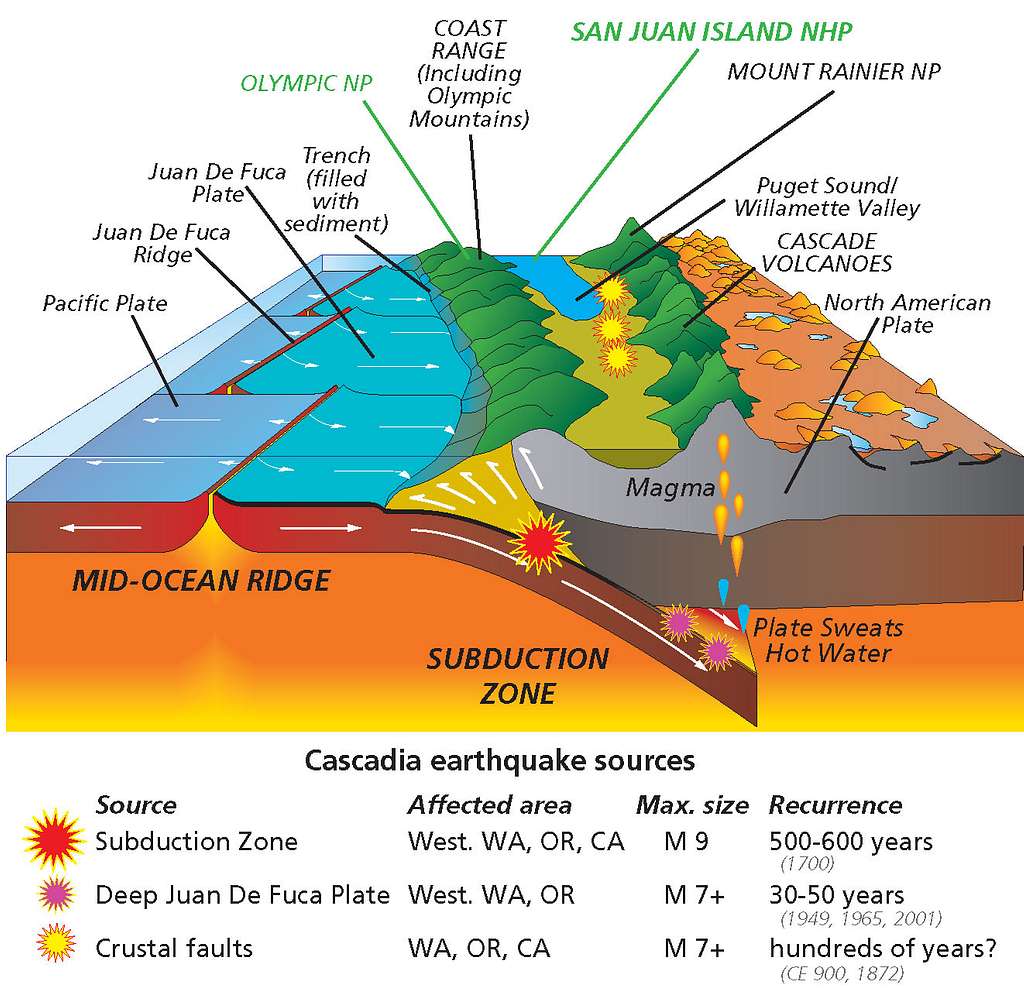
The first and most significant revision involves the geometry of the Juan de Fuca plate itself. For decades, hazard models assumed a particular depth for the plate as it descends beneath the North American continent. The new research, drawing on updated offshore seismic data and improved imaging techniques, has determined that the plate is approximately 5 kilometers shallower than previously estimated along key segments of the subduction zone.
Five kilometers may not sound like much on a geological scale. But in terms of ground shaking intensity, it changes everything. When the source of an earthquake is closer to the surface, seismic energy has less distance to travel before it reaches the ground that people live on. The attenuation — the natural loss of energy that occurs as waves travel through rock — is reduced. The shaking that arrives at the surface is stronger. According to the revised model, this geometric correction alone translates to between 9 and 17 percent more intense ground shaking across affected areas during a major Cascadia rupture, compared to what previous hazard assessments predicted.
That is not a marginal adjustment. Building codes, bridge designs, hospital retrofits, and emergency response plans across the Pacific Northwest were calibrated to the older model. A 9 to 17 percent increase in projected shaking intensity has direct implications for infrastructure that was considered adequate under the previous standard.
The second discovery came from onshore subsurface data. Researchers identified a previously unmapped sedimentary basin beneath Tillamook, Oregon — a coastal community that sits within the zone of highest anticipated shaking during a Cascadia event. Sedimentary basins are geologically significant for one specific reason: they amplify seismic waves. When ground motion enters a basin filled with soft, unconsolidated sediment, those waves slow down and grow taller. The phenomenon is called basin amplification, and it is well documented in earthquake science. The 1985 Mexico City earthquake is one of the most studied examples, where a lake-bed basin amplified distant seismic waves and caused catastrophic structural failures in a city that sat far from the rupture itself.
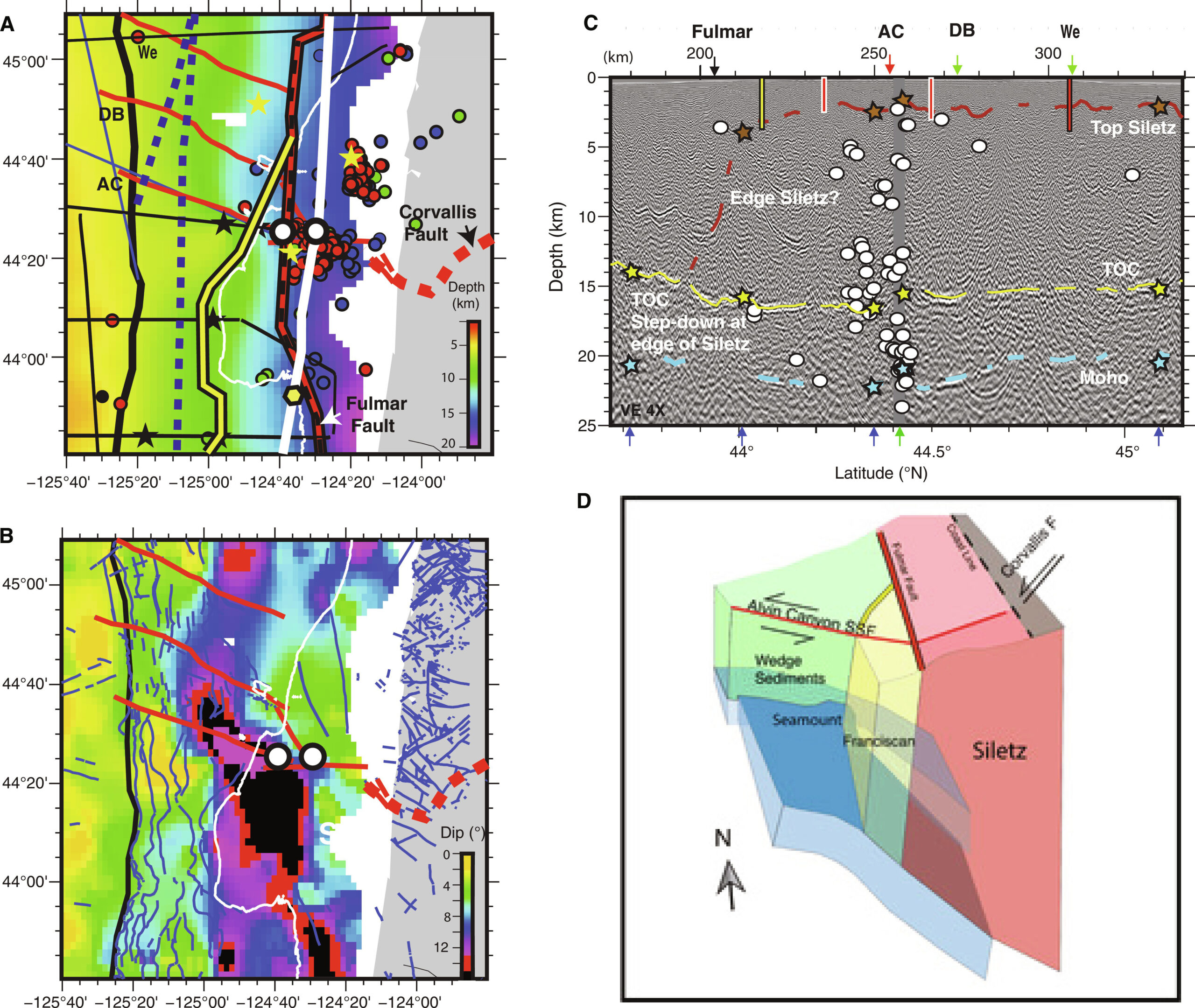
The basin beneath Tillamook was not in any previous hazard model. It was hidden. The communities built above it were not designed with basin amplification in mind, because no one knew the basin was there. That has now changed. Researchers are currently working to quantify exactly how much additional amplification the basin would contribute during a major event, but the directional implication is already clear — Tillamook’s hazard profile is more severe than previously understood.
The third revision concerns the locking state of the central fault segment. The Cascadia Subduction Zone is not a single uniform structure. It is divided into segments that behave differently from one another. Locking refers to the degree to which the two plates are stuck together along the fault interface — the more fully locked a segment is, the more strain it is accumulating, and the more energy it will release when that strain is finally discharged in a rupture.
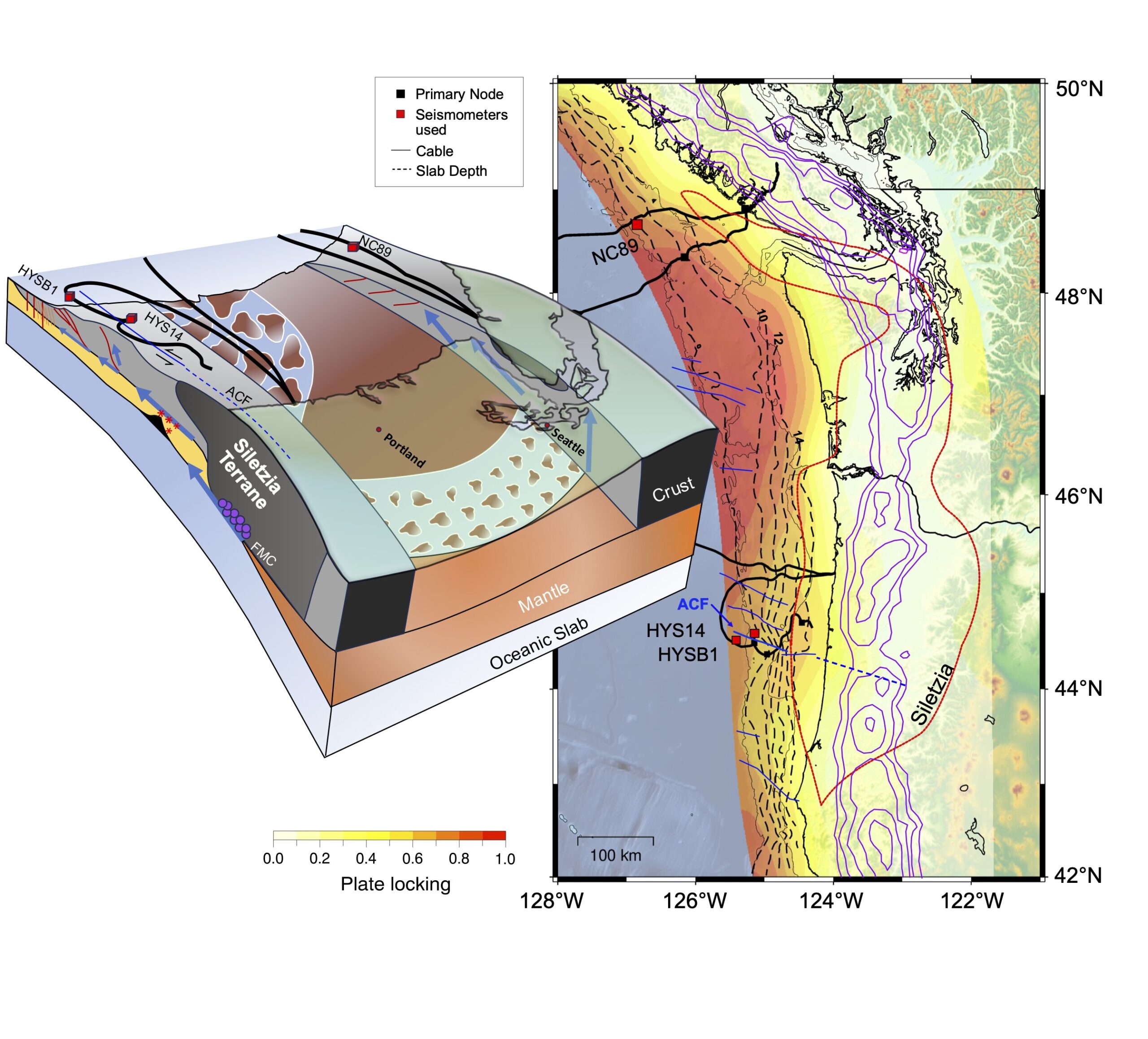
Previous models treated the central segment of Cascadia as fully locked, consistent with the northern and southern segments. New offshore data tells a different story. The central segment appears to be only partially locked, meaning it is not accumulating strain at the same rate as the rest of the fault. This finding requires careful interpretation. A partially locked segment does not mean a less dangerous one. It could mean that strain is being released gradually through slow slip rather than building toward a single catastrophic event — but it could also indicate that the segment will behave unexpectedly during a full-margin rupture. The honest scientific position is that partial locking introduces uncertainty into the rupture models rather than reducing the hazard. Researchers are treating it as a complicating factor, not a reassuring one.
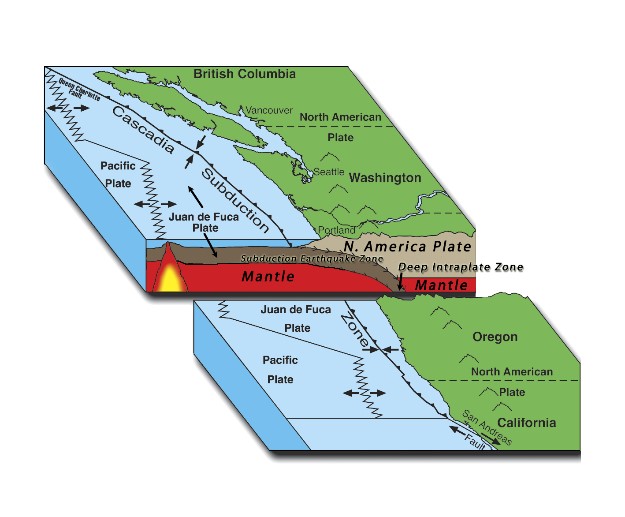
To understand why all three of these revisions matter, it helps to understand what Cascadia has already done.
The geological and historical record of the Cascadia Subduction Zone is unambiguous. The fault has produced megaquakes — earthquakes in the magnitude 8.0 to 9.2 range — repeatedly throughout its history. The most recent full-margin rupture occurred on January 26, 1700. We know the date with unusual precision because Japanese records document a tsunami that struck the Japanese coastline that same night, and that wave can be traced back to a Cascadia source through oceanographic modeling. Tree ring data, coastal stratigraphy, and oral traditions from Indigenous communities of the Pacific Northwest all confirm a catastrophic event at that time.
Prior to 1700, the geological record shows that full or partial Cascadia ruptures have occurred roughly every 200 to 500 years, with an average recurrence interval often cited around 300 to 500 years depending on the segment analyzed. The range is wide because the fault does not rupture on a fixed schedule — it ruptures when accumulated strain exceeds the frictional strength holding the plates together, and that threshold is not reached at perfectly regular intervals. What the record does establish clearly is that Cascadia ruptures at megaquake scale, and that 2026 marks more than 325 years since the last one.
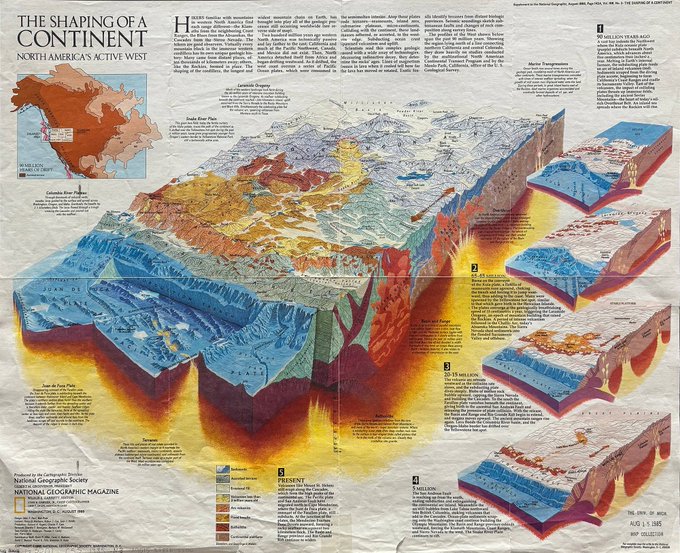
The question of volcanic hazard is inseparable from a discussion of Cascadia. The subduction of the Juan de Fuca plate beneath North America is the geological engine that drives the Cascade volcanic arc — the chain of volcanoes that runs from northern California through Oregon and Washington into British Columbia. Mount Hood and Mount St. Helens are the two most closely monitored volcanoes in the arc, and their current status is relevant to any comprehensive assessment of regional hazard.
Mount Hood, rising to 11,249 feet southeast of Portland, Oregon, remains in a state of background unrest. It is not erupting, and no escalation in activity has been detected in conjunction with the new Cascadia research. However, Mount Hood is considered one of the most hazardous volcanoes in the United States due to its proximity to the Portland metropolitan area, its summit glacier system — which would generate dangerous lahars in the event of an eruption — and its history of eruptive episodes as recently as the late 1700s. Scientists do not believe a Cascadia rupture would directly trigger a Mount Hood eruption, but the relationship between large subduction zone earthquakes and subsequent volcanic activity in the same arc is an active area of research. Stress changes caused by megaquakes have been documented to influence volcanic systems over timescales of months to years.
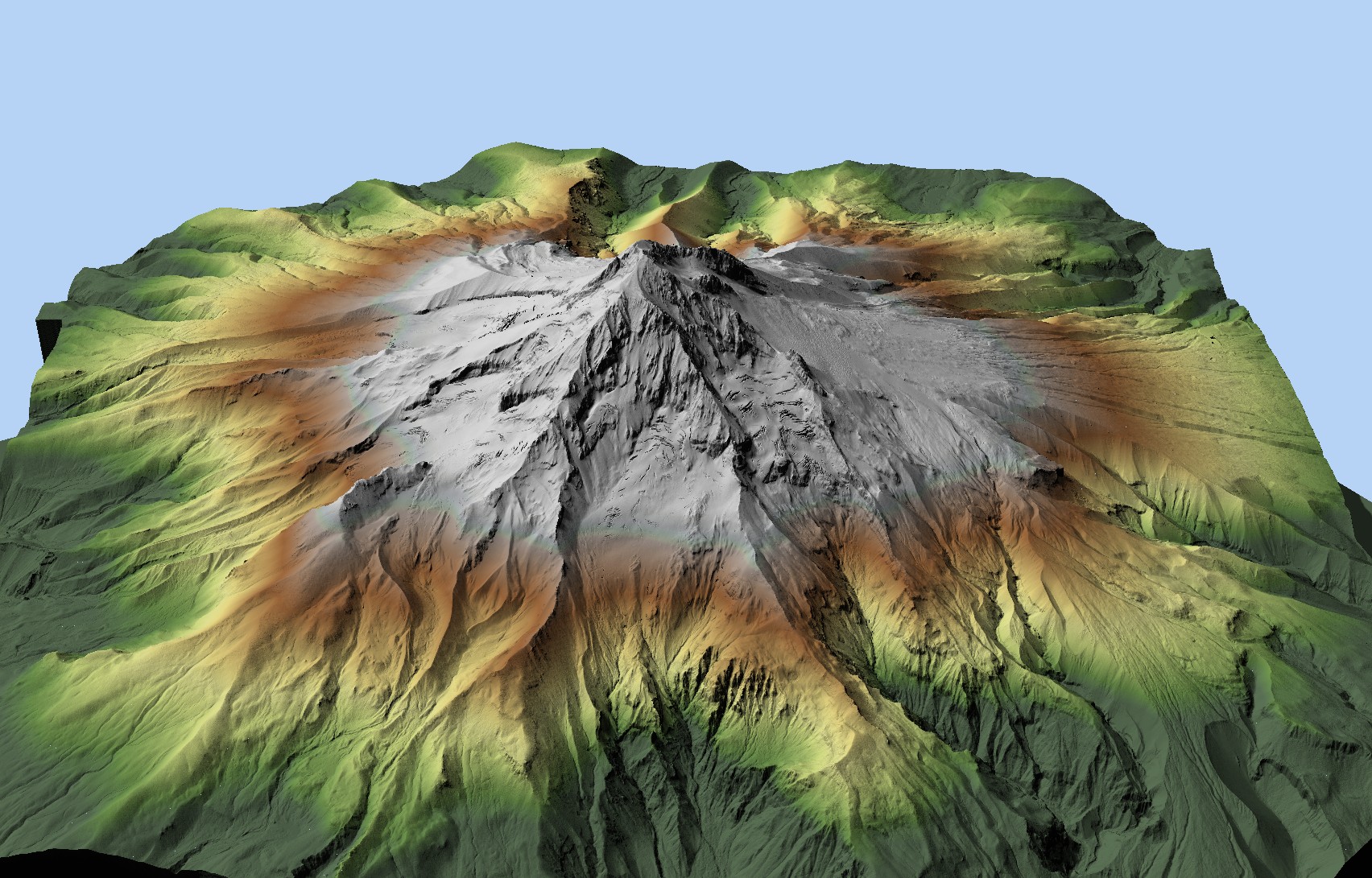
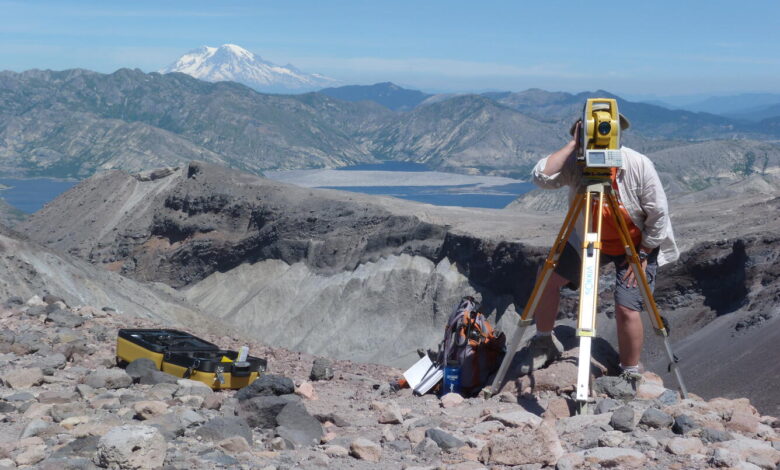
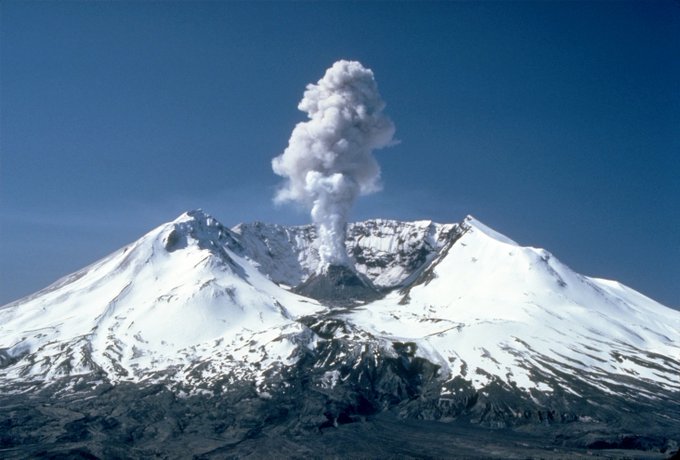
Mount St. Helens, permanently altered by its catastrophic 1980 eruption, remains the most seismically active volcano in the Cascade arc and is considered the most likely candidate for the next eruption in the range. It last erupted between 2004 and 2008, building a lava dome inside its crater without a major explosive event. Current monitoring shows elevated but not alarming activity levels. The volcano is watched continuously by the USGS Cascades Volcano Observatory.
What do the April 2026 findings mean for regions beyond the Pacific Northwest?
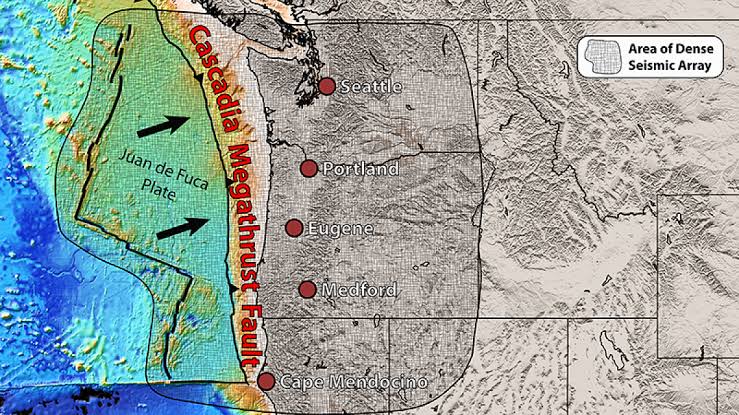
The direct shaking hazard from a Cascadia rupture is geographically focused — the most intense effects would be concentrated within roughly 100 kilometers of the coast, covering portions of northern California, Oregon, Washington, and coastal British Columbia. But the consequences of a full-margin Cascadia rupture are not contained within that zone.
A magnitude 9.0 or greater earthquake along the full length of the subduction zone would generate a significant Pacific-wide tsunami. The 1700 event produced waves that crossed the entire Pacific Ocean and caused damage in Japan. A comparable modern event would trigger tsunami warnings across Hawaii, Japan, the Philippines, and other Pacific rim nations. Coastal communities throughout the Pacific Basin maintain evacuation protocols specifically for Cascadia scenarios.
Within North America, the economic and infrastructure disruption from a major Cascadia event would extend far beyond the immediate damage zone. The ports of Seattle, Tacoma, Portland, and Vancouver handle a substantial share of Pacific trade for the entire continent. Highway and rail corridors that pass through the affected region connect the rest of North America to Pacific markets. Natural gas infrastructure, electrical transmission lines, and fiber optic cables that serve the western United States run through zones of projected severe shaking. The cascading effects on supply chains, energy distribution, and communications would be felt nationally and internationally.
The April 2026 research does not predict an imminent rupture. No scientific tool currently exists that can predict earthquakes with the specificity required to issue meaningful short-term warnings. What the research does do is provide a more accurate picture of what a rupture will look like when it occurs — and by the standards of that more accurate picture, the previous hazard models were systematically underestimating the risk.
The Juan de Fuca plate is shallower than the models said. The ground beneath Tillamook will shake harder than the models predicted. The central segment behaves differently than assumed. Each of these findings, taken individually, would represent a meaningful revision. Taken together, they represent a substantial recalibration of one of the most consequential geological hazards on the planet.
The Cascadia Subduction Zone has not changed. It is the same fault it has always been. What changed in April 2026 is how well we understand it.