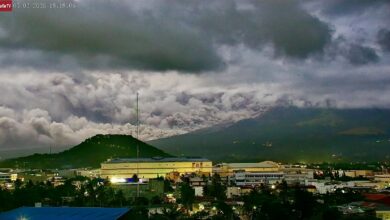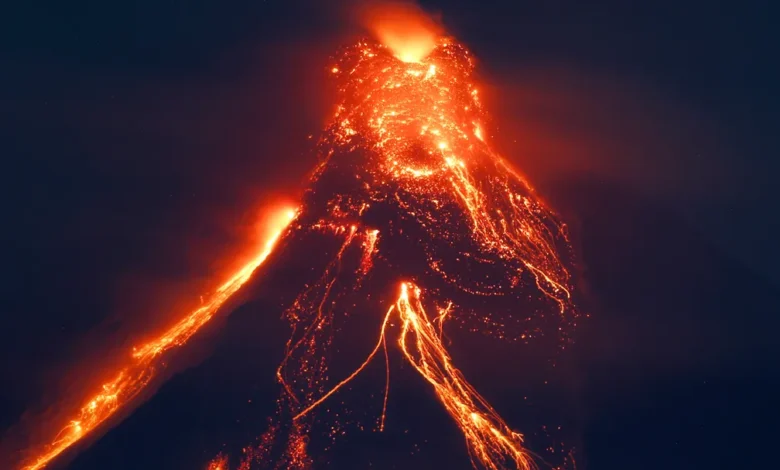
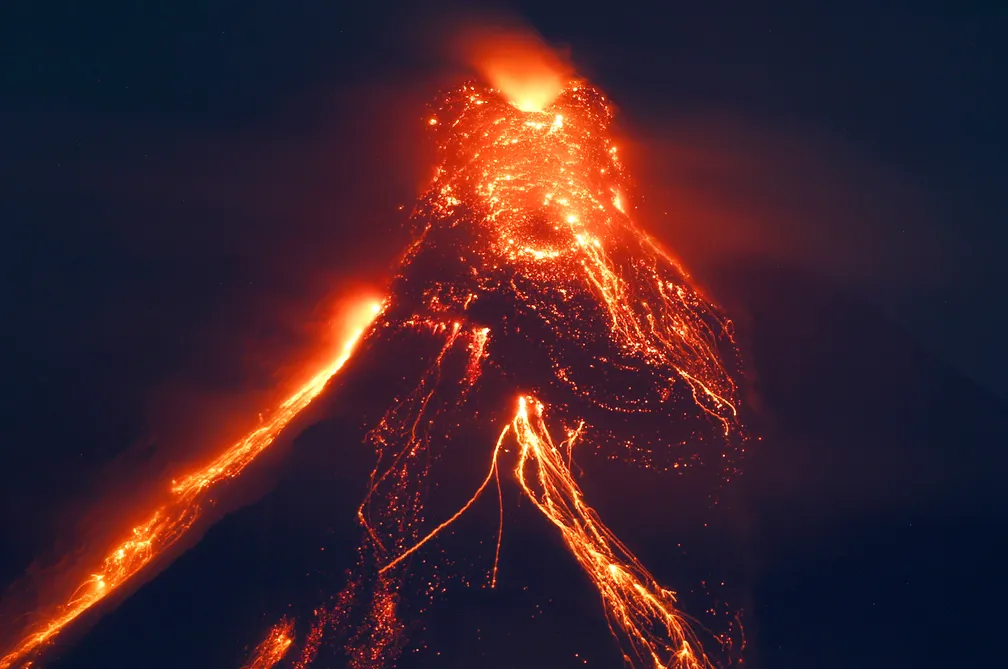
On January sixth, two thousand and twenty six, Mayon Volcano in the Philippines began erupting. It has not stopped since. As of April twenty-ninth, two thousand and twenty six, that is one hundred and thirteen consecutive days of active lava effusion, rockfalls, pyroclastic density currents, sulfur dioxide emissions, and intermittent lava fountaining. Three separate lava channels are currently active on the volcano’s flanks. The Philippine Institute of Volcanology and Seismology has maintained the volcanic alert at Level Three — the second highest on their five-level scale — for the entire duration. This is not a volcano winding down. This is a volcano in a sustained, productive, and potentially escalating state of magmatic unrest that has quietly become one of the longest continuous eruptive episodes Mayon has produced in recent history.
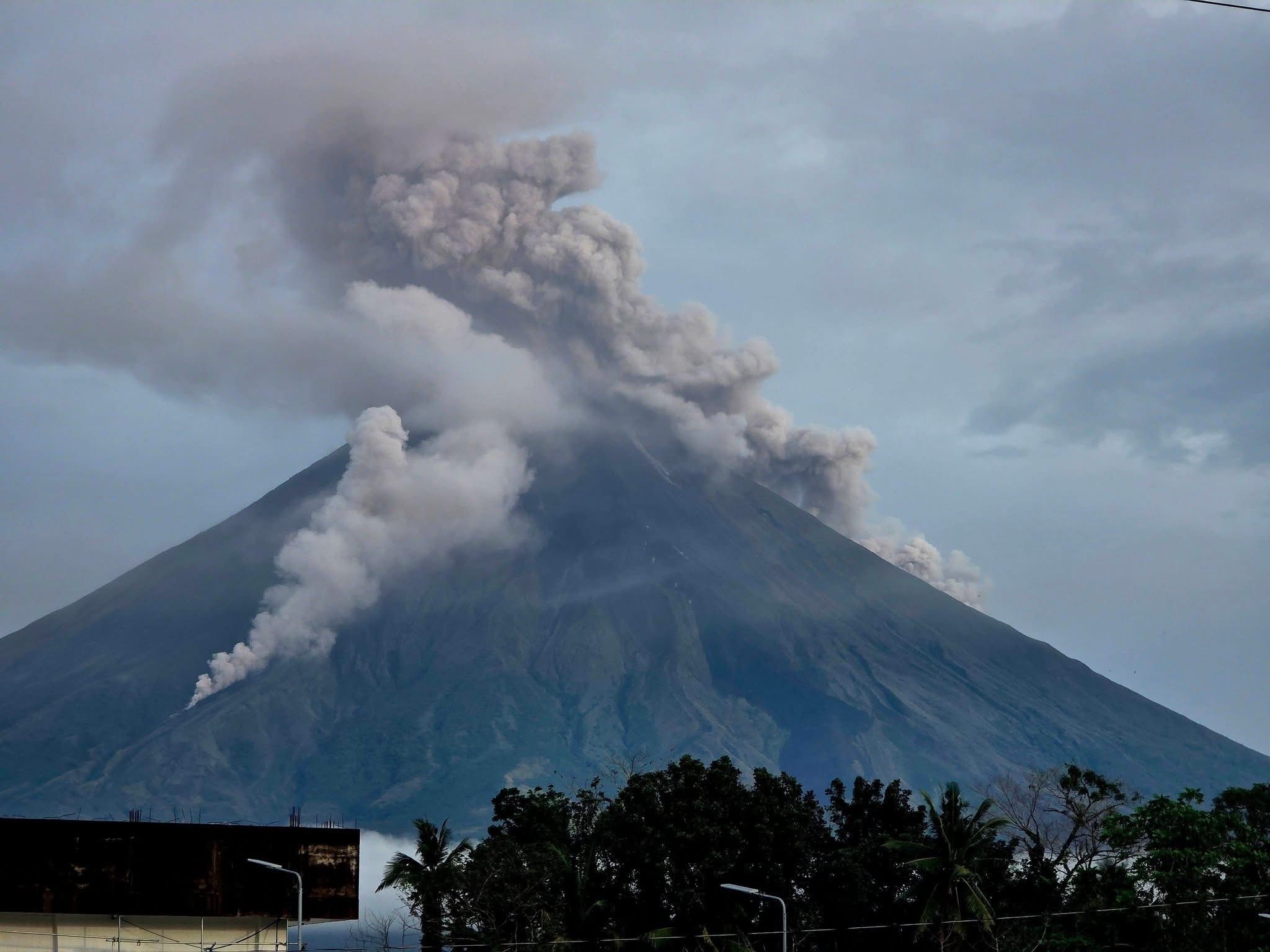
Mayon is the most active volcano in the Philippines and one of the most geometrically perfect stratovolcanoes on Earth. Its near-symmetrical cone, built over centuries of repeated eruptions, is both a landmark and a persistent hazard. Historical eruptions are documented back to sixteen sixteen CE, consistently characterized by lava flows, pyroclastic density currents, and lahars descending the roughly forty drainage gullies that radiate from the summit. The current eruption began with the slow extrusion of lava from a summit dome in early January, preceded by months of escalating rockfall activity and ground deformation detected through GPS, electronic tilt sensors, and electronic distance measurement equipment. By mid-January, the Philippine authorities raised the alert level to three, evacuated all residents within the six-kilometer Permanent Danger Zone, and warned aviation authorities about hazards to aircraft operating near the crater.
The most recent bulletin from PHIVOLCS, covering twenty-nine April two thousand and twenty six, documents the current state of activity in precise terms. In the previous twenty-four hours, twelve volcanic earthquakes were recorded, including eight continuous volcanic tremors lasting between one and seventy-one minutes. Three hundred and seventy-seven rockfall events were registered. Sulfur dioxide flux measured one thousand nine hundred and fifty one tonnes per day, consistent with sustained shallow magma movement. The three active lava channels extend three point eight kilometers down the Basud gully to the east, three point two kilometers down the Bonga gully to the southeast, and one point three kilometers down the Mi-isi gully to the south. The monitoring data also shows short-term deflation of the main volcanic edifice combined with localized inflation on the northeastern flank — a pattern that volcanologists interpret as ongoing magma redistribution within the feeding system beneath the summit.
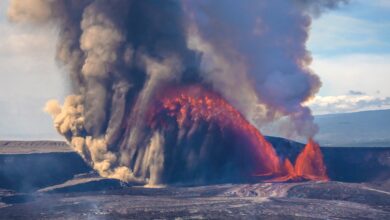
Among the more significant hazards associated with the current eruption are the pyroclastic density currents, known locally as uson. These fast-moving mixtures of superheated gas, volcanic ash, and incandescent rock fragments can travel down the slopes at high speed and cannot be outrun. They do not follow predictable lava channels and can change direction based on slope geometry and internal dynamics. During the earlier months of this eruption, multiple PDC events were recorded daily, some extending more than two kilometers from the summit. On April seventh, two thousand and twenty six, two brief lava fountaining events were observed at eight thirty-nine in the morning and nine twenty-three in the morning, producing ash clouds approximately three hundred meters tall that drifted toward the northwest. This confirms that the eruption is not purely effusive — minor explosive episodes continue to occur intermittently, adding a projectile hazard to communities and visitors in the area.
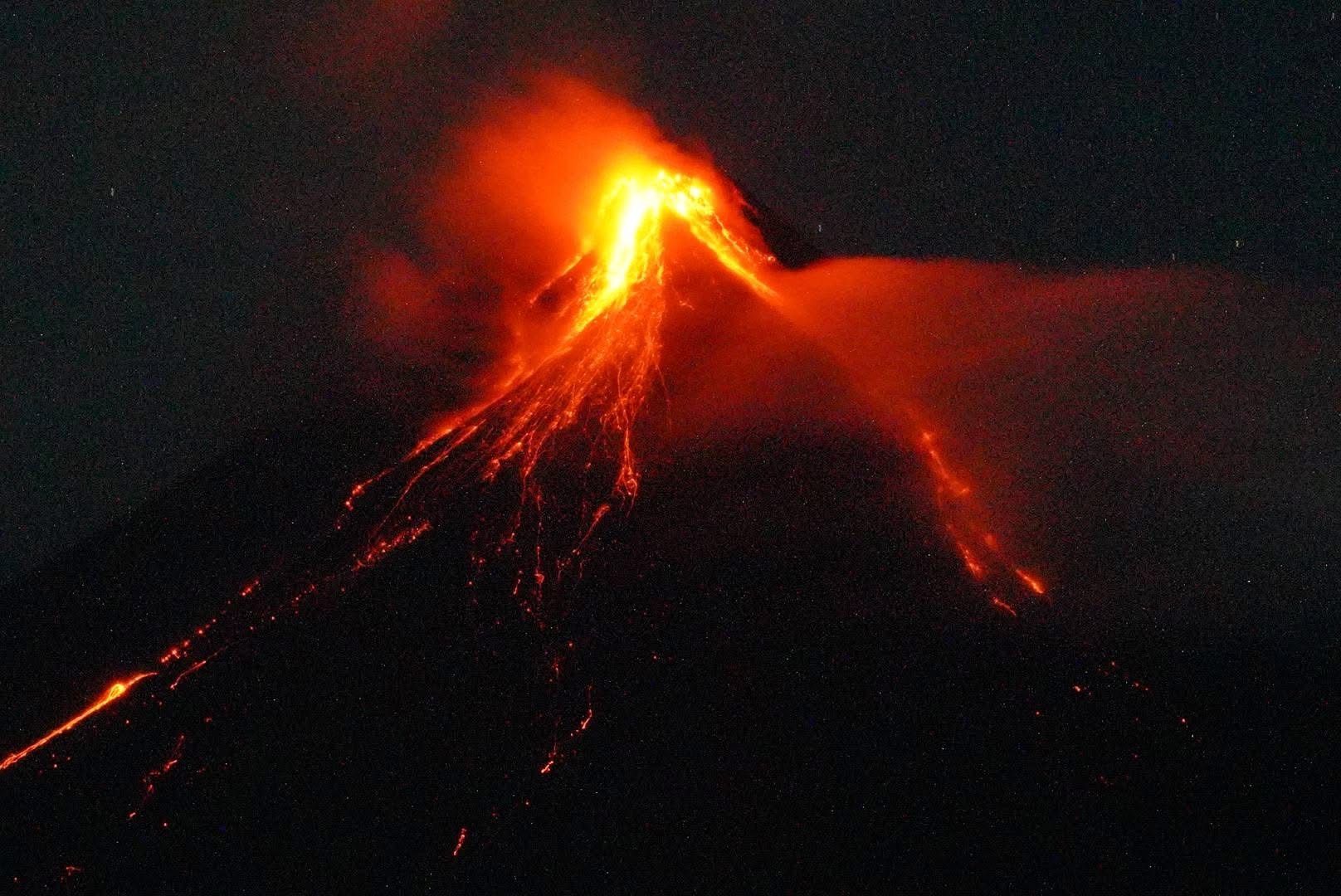
By mid-February, PHIVOLCS estimated that Mayon had already produced approximately eleven point eight two million cubic meters of lava, which combined with associated volcanic debris gave a total estimated volcanic output of twenty-three point six four million cubic meters. That number has grown considerably in the ten weeks since that estimate. The Bonga gully contains the highest number of lava flow units — at least five separate consolidated deposits — indicating that multiple pulses of lava have stacked on top of one another as the eruption progressed. When the hot interior of these units contacts water from rain or groundwater, secondary explosions can occur that generate rockfalls, ash emissions, and ballistic projectiles without involving new magma. This adds an additional layer of unpredictability to an already complex eruption.

In terms of broader implications, the sustained sulfur dioxide output from Mayon contributes to the formation of sulfate aerosols in the regional troposphere, affecting air quality across portions of the Philippine archipelago and potentially influencing local precipitation patterns over extended emission periods. The communities displaced from the Permanent Danger Zone face direct economic consequences from disrupted agriculture, particularly the abaca and coconut farming characteristic of the Mayon region. Regarding seismic risk, Mayon sits above the Manila Trench subduction zone, where the Philippine Plate descends beneath the Eurasian Plate. While no direct causal link between Mayon’s eruptive activity and regional fault behavior can be established from current data, the seismically active environment in which this eruption is occurring means that monitoring must remain comprehensive across multiple hazard systems simultaneously. The volcano is being watched closely. It shows no signs of stopping.