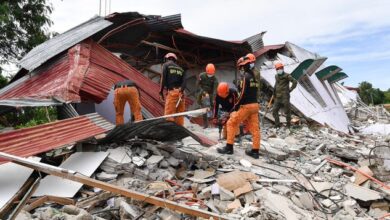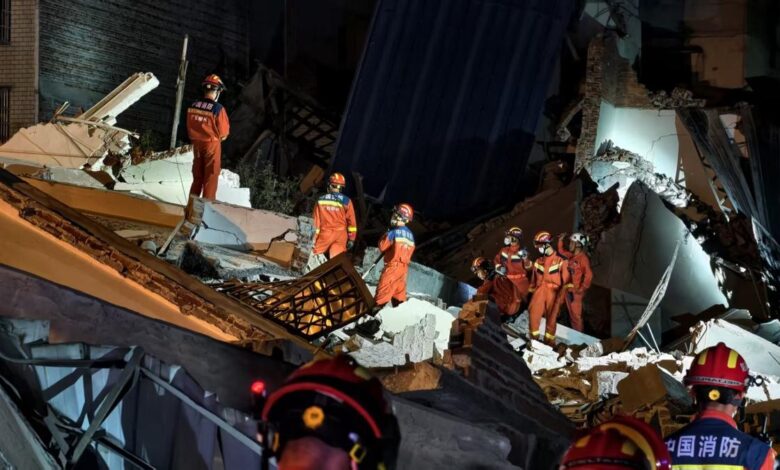
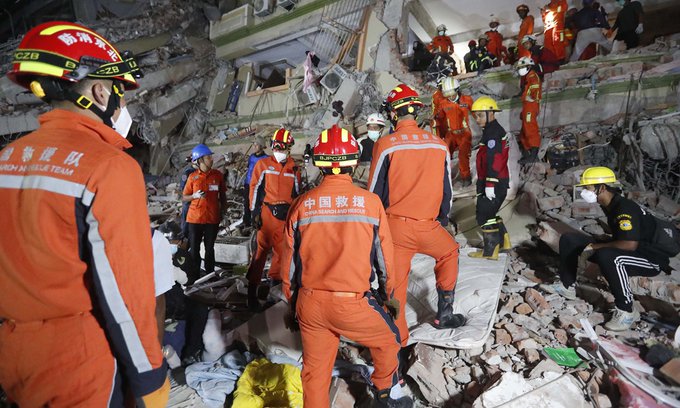
In the early hours of May 18, 2026, a moderate earthquake struck southern China and did something moderate earthquakes are not supposed to do. It brought down thirteen buildings, forced more than seven thousand people to evacuate, and left rescue crews working through debris in Liuzhou — a city of more than four million people — before sunrise.
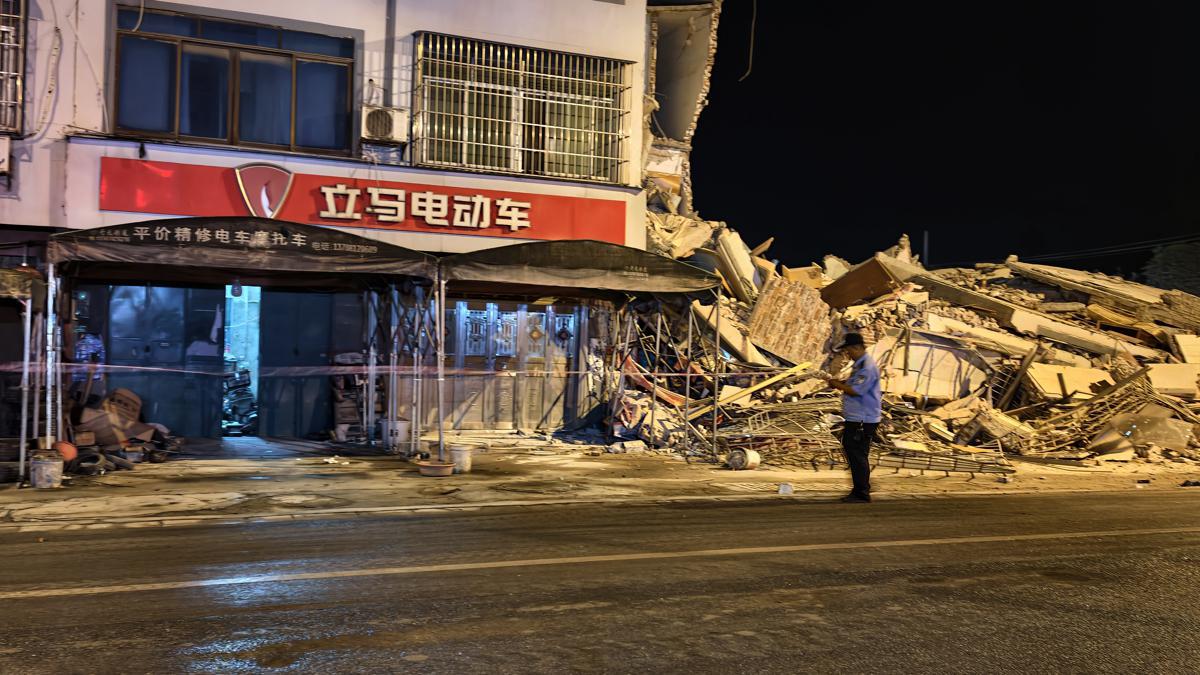
The seismic event registered at magnitude 5.2 according to China’s seismological agency, and 5.0 on the USGS scale. By any standard classification, this is not a major earthquake. It is the kind of event that occurs dozens of times a year across China, most of which cause no significant structural damage. What made Liuzhou different was not the magnitude.
It was the depth.
The 8-Kilometer Problem
The earthquake occurred at a depth of approximately 8 kilometers — roughly 5 miles below the surface. This places it firmly in the category of shallow crustal earthquakes, which seismologists define as any rupture occurring above 70 kilometers depth, with the most dangerous subset being events shallower than 20 kilometers.
At shallow depths, seismic energy has almost no distance to dissipate before reaching the surface. The wave arrives concentrated and abrupt rather than spread out and attenuated. Ground acceleration in Liuzhou reached levels typically associated with earthquakes significantly larger in magnitude. The buildings in the affected area were not designed for that level of acceleration.
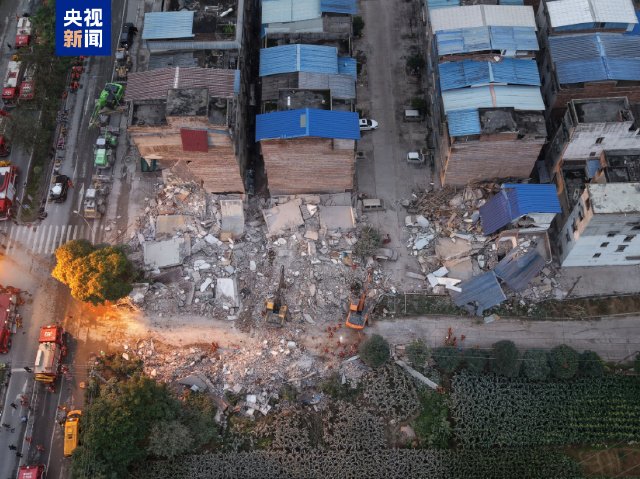
This is the core mismatch that turned a moderate event into a disaster: the earthquake delivered energy at the surface as if it were much larger, and the infrastructure encountered it with no seismic preparation for that intensity.
Why Guangxi Was Unprepared
China’s most seismically active regions are concentrated in its western provinces. Sichuan, Yunnan, and Tibet sit along the active collision boundary between the Indian and Eurasian plates — a geological process that has been loading faults for approximately fifty million years. The 2008 Wenchuan earthquake, which struck Sichuan at a depth of 19 kilometers and a magnitude of 7.9, killed nearly 70,000 people and remains the deadliest seismic event in China this century.
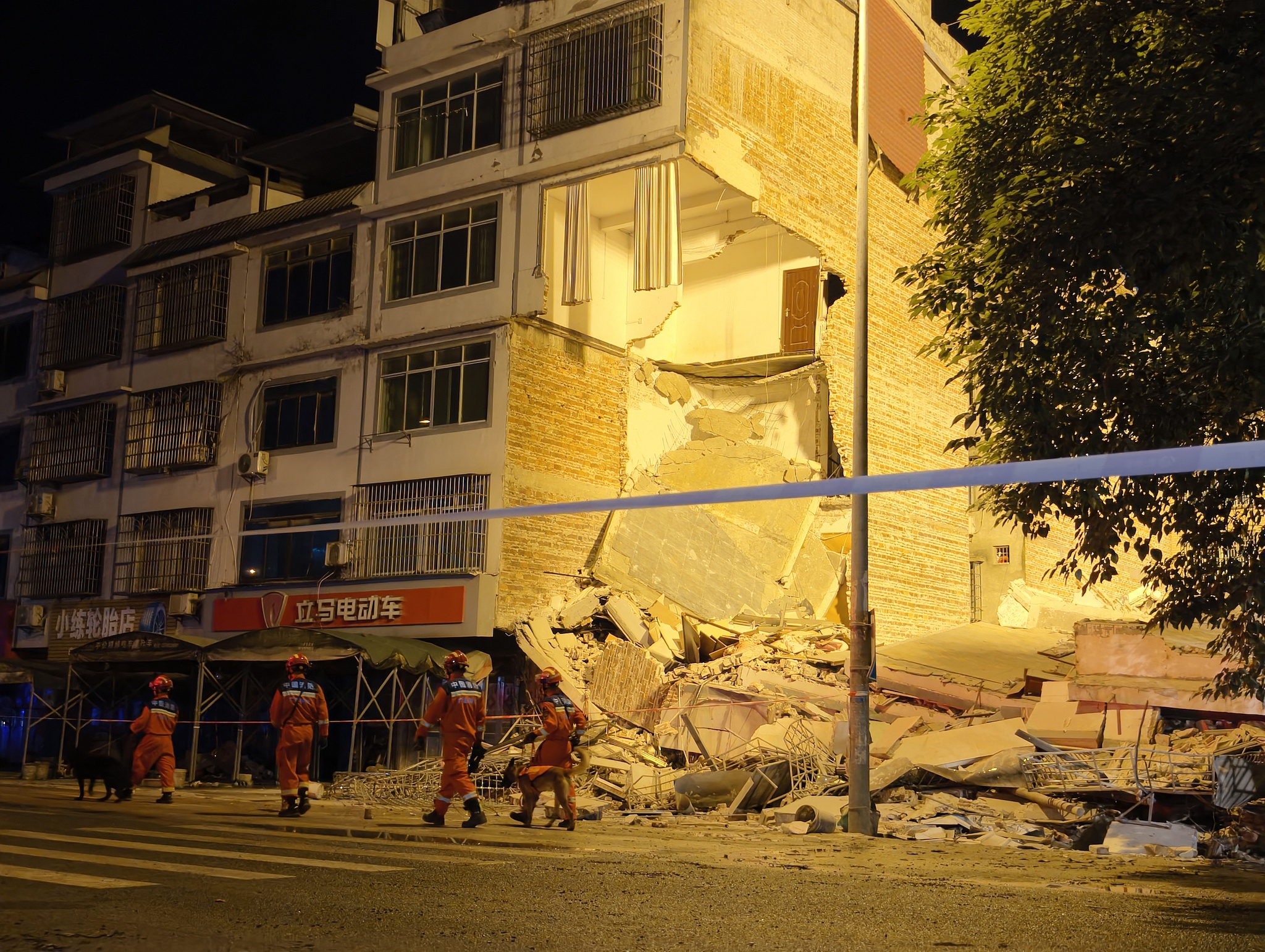
Guangxi sits on older, more stable geological terrain. Regional fault systems exist throughout the province, but major rupture events are historically infrequent. Building codes and public preparedness infrastructure in the region have not been calibrated for high seismic risk in the way that Sichuan’s has. The structures that collapsed in Liuzhou were almost certainly built to standards appropriate for their assessed seismic hazard — which turned out to be insufficient for a shallow rupture at 8 kilometers.
The Physics of Shallow Rupture
Understanding why shallow earthquakes cause disproportionate damage requires understanding what happens to rock at different crustal depths. In the upper 10 to 15 kilometers of the crust, rock is cold, dense, and brittle. It does not flex under accumulated stress. It locks along fault planes, loads progressively, and then fails suddenly — releasing energy in a sharp, impulsive burst.
Deeper ruptures occur in rock that behaves more plastically. The energy release is more gradual, the wave propagation more diffuse, and the surface shaking less abrupt. Structures can tolerate gradual shaking more effectively because their frames have time to distribute load across joints and supports. An abrupt, impulsive jolt from a shallow source hits structures before redistribution is possible, concentrating load at weak points.
In Liuzhou, thirteen structures reached their weak points simultaneously.
Response and Current Status
Emergency personnel were deployed to the affected area immediately following the event. As of the latest reports, two people have not survived the earthquake, and one person remains missing. Four individuals were transported to hospital, none with life-threatening conditions. Railway authorities initiated inspections of line integrity across the affected area. Communication networks, water supply, and power remained operational in most of the city.
Search and rescue operations are continuing.
What This Means Beyond China
The specific fault system involved in the Liuzhou earthquake is regional in scope. The seismic hazard it generated is contained to Guangxi and surrounding areas. However, the geological dynamics it demonstrated are relevant globally.
Shallow crustal earthquakes occur on every inhabited continent. The New Madrid Seismic Zone in the central United States produced a series of catastrophic shallow earthquakes in 1811 and 1812 that temporarily altered the course of the Mississippi River. The zone has not produced a comparable event since, but the fault system remains active. Similar profiles exist across northern Europe, southeastern Australia, interior South America, and parts of the Middle East — regions with infrequent but geologically capable fault systems operating at shallow depths.
The lesson from Liuzhou is not that southern China is uniquely vulnerable. It is that magnitude alone does not predict damage. A 5.2 at 8 kilometers and a 5.2 at 60 kilometers are categorically different events in terms of surface impact, even though they carry the same number in every headline.
Seismic risk assessment requires depth. That is true in China, and it is true everywhere else.
Sources: USGS Earthquake Hazards Program | China Earthquake Networks Center (CENC) | Reuters | Xinhua News Agency